Hot Chocolate: A Miracle Cure?
For
more than 4,000 years, drinking chocolate has been quietly reinventing itself. What began as a bitter, ceremonial liquid has slowly transformed into the rich, comforting beverage we recognize today. Its story mirrors humanity’s own evolution of taste, technology, and ritual.
The earliest evidence of chocolate as a drink dates back to around 3300 BCE, when cacao residue was found on ceramic vessels in what is now Ecuador. The Mayo-Chinchipe people were likely among the first to ferment and consume cacao as a beverage, laying the foundation for a tradition that would spread across the Americas.
Centuries later, the Maya and Aztec civilizations refined chocolate into a drink known as xocolatl, or “bitter water.” This was nothing like modern hot chocolate. It was made with water instead of milk and flavored with chili, vanilla, ground corn, or almonds. The drink was intentionally bold and intense, prized not for sweetness but for its complexity and power.
In Mesoamerican culture, chocolate was sacred. It was called the “food of the gods,” used as currency, offered in religious ceremonies, and consumed by warriors and nobility. Texture mattered just as much as flavor. To create a desirable froth, the liquid was poured repeatedly between vessels, aerating it into a foamy, luxurious drink. This technique eventually evolved into the use of the molinillo, a wooden whisk still associated with traditional Mexican chocolate today.
Everything changed when Spanish explorers encountered chocolate in the early 16th century. Hernán Cortés brought cacao beans and preparation tools back to Spain, where European palates quickly rejected the bitterness. Sugar, honey, and agave were added, transforming chocolate into something smoother and more indulgent. By the 17th century, Europe was in the grip of “chocomania.” Drinking chocolate became a status symbol among aristocrats and clergy, with chili peppers replaced by expensive sugar.
Chocolate’s popularity sparked debate as well as devotion. For nearly a century, theologians argued over whether drinking chocolate violated the Catholic Lenten fast. In 1664, the Church officially ruled that it did not. At the same time, physicians disagreed on its health effects—some prescribed it for stomach ailments and coughs, while others warned it could be harmful.
By the 18th century, chocolate houses began appearing in London, much like coffee houses. These social hubs served a richer version of the drink, now made with milk instead of water and sweetened generously. Chocolate had become smoother, creamier, and unmistakably indulgent.
The Industrial Revolution reshaped chocolate once again. In 1828, Dutch chemist Coenraad Johannes van Houten invented a cocoa press that separated cocoa butter from cocoa solids. His alkalization process, known as “Dutching,” reduced bitterness and allowed cocoa powder to dissolve more easily in liquid. This innovation ushered in the era of hot cocoa, distinct from traditional hot chocolate made from melted paste. In 1876, Daniel Peter further refined the drink by successfully incorporating milk into chocolate itself, enhancing its creamy profile.
The 20th century marked chocolate’s full commercialization. Companies like Hershey’s marketed it as a wholesome, energizing food for children, even claiming it was “more sustaining than meat.” In 1917, the Angelus Marshmallow Company popularized the now-iconic pairing of marshmallows and hot chocolate, cementing its place as an American winter tradition.
Today, drinking chocolate continues to evolve. Small-batch, bean-to-bar makers are reviving old-world techniques while experimenting with modern flavors—from cinnamon and candy canes to peanut butter and beyond. The drink’s texture tells the story best: a journey from something closer to a thin, gritty broth to a smooth, velvety syrup.
Chocolate’s evolution is not just about sweetness. It’s about refinement, ritual, and the centuries-long pursuit of comfort in a cup.
Today,
Vampire Penguin carries that centuries-long evolution forward by returning to the heart of what drinking chocolate was always meant to be: real chocolate, thoughtfully prepared. Our hot chocolate lineup—milk chocolate, dark chocolate, white chocolate, and peppermint white chocolate—starts by steaming fresh milk and melting real chocolate, not powders or shortcuts. The result is a drink that’s rich, smooth, and intentionally crafted, honoring chocolate’s journey from ancient ritual to modern comfort. Each cup is a reminder that great hot chocolate isn’t just something you drink—it’s something you experience.
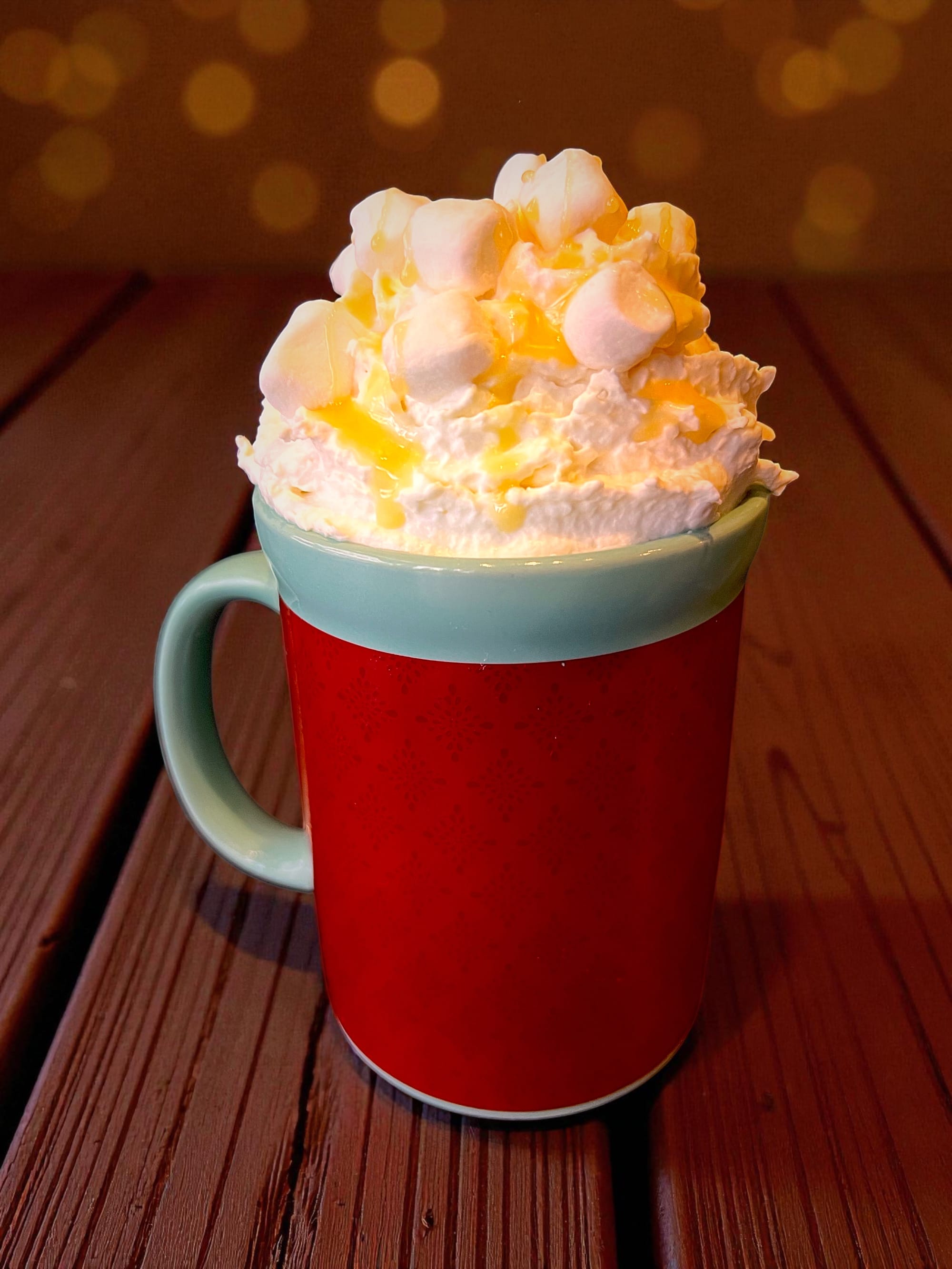
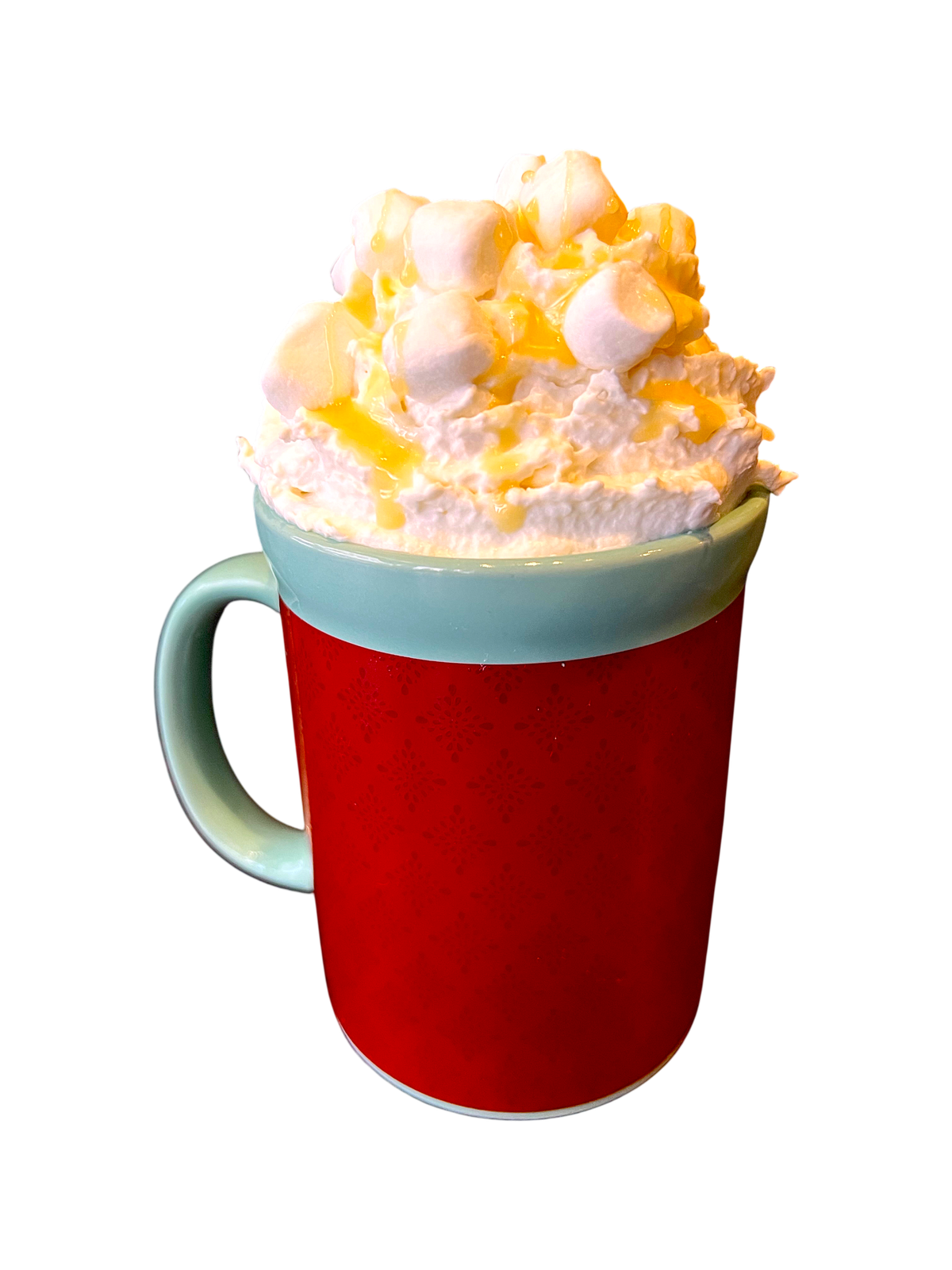
Peppermint White Chocolate covered with white chocolate sauce, whipped cream and marshmallows