The Berry That Wasn’t Quite a Berry

Long before it topped shortcakes or swirled into smoothies, the strawberry was quietly making history—despite not technically being a berry at all. Its story winds through prehistoric forests, medieval cathedrals, royal gardens, and cutting-edge laboratories, evolving from a foraged woodland fruit into one of the most globally cultivated crops on Earth.
From Forest Floor to Ancient Festivities
The strawberry’s earliest chapter begins in the Neolithic period, when humans across Europe and the Americas foraged wild woodland strawberries (Fragaria vesca). These small, aromatic fruits required no planting—nature handled that part.
By the time of Ancient Rome, strawberries had taken on new meaning. Romans valued them for medicinal uses, believing they could freshen breath and lift moods. They also appeared in celebrations honoring Adonis, linking the fruit to beauty and renewal.
Medieval Gardens, Medicine, and Meaning
The Middle Ages transformed strawberries from wild finds into cultivated treasures. In the 14th century, France became a center of formal strawberry cultivation when King Charles V planted more than 1,000 plants in the Royal Gardens of the Louvre.
By the late 15th century, strawberries were staples of European apothecary gardens, used in tinctures and ointments. Their importance was cemented in 1485 with the publication of the first color illustration of a strawberry in Herbarius zu Teutsch, a German herbal text.
Beyond medicine, strawberries carried deep symbolic weight. Medieval stonemasons carved strawberry motifs into church altars and pillars as symbols of perfection and righteousness. Artists emphasized the fruit’s three-part leaf as a reference to the Holy Trinity, while its red flesh represented drops of Christ’s blood.
Exploration, Satire, and Shakespeare
The Age of Exploration expanded the strawberry’s world. In 1534, French explorer Jacques Cartier documented “vast patches” of strawberries along the Saint Lawrence River. These North American strawberries (Fragaria virginiana) were small but exceptionally sweet and quickly gained favor in Europe.
In 1542, during the Spanish invasion of Chile, Pedro de Valdivia named the local variety “frutilla,” meaning “little fruit,” a term still used throughout much of South America.
Strawberries also found their way into humor and literature. A 1570 Dutch Protestant caricature used the French word fraises to mock fashionable ruffled collars, likening them to strawberry leaves. William Shakespeare later drew on the fruit’s symbolism in his plays—using strawberries to represent goodness in Richard III and virginity in Othello through a strawberry-embroidered handkerchief.
By the early 1600s, strawberries had become so culturally embedded in England that they appeared in popular music, including a jig sung to the tune “Strawberry leaves make maidens fair.” Around the same time, Fragaria virginiana plants were transported to France and England, with Paris recording its first catalogued specimen in 1601.
A Spy, a Ship, and a Scientific Breakthrough
The modern strawberry owes its existence to an unlikely chain of events. In 1714, French engineer—and alleged spy—Amédée-François Frézier returned from Chile carrying specimens of the large coastal strawberry (Fragaria chiloensis). He reportedly sacrificed much of his ship’s water supply to keep the plants alive during the voyage.
The real transformation came in 1766 at the Gardens of Versailles, where botanist Antoine Nicolas Duchesne discovered that spontaneous cross-pollination between the Chilean strawberry and the North American variety created an entirely new hybrid: Fragaria × ananassa. Known in the late 18th century as the “pineapple strawberry” for its aromatic fragrance, this hybrid became the genetic foundation for nearly all modern commercial strawberries.
Victorian Perfection and British Tradition
The 19th century refined the strawberry’s reputation. In England, breeders like Michael Keen developed new cultivars such as “Keen’s Seedling,” dramatically improving fruit size and flavor.
In 1877, the first Wimbledon Championship established strawberries and cream as a lasting British tradition. During the Victorian era, the fruit’s symbolism peaked—within the “language of flowers,” the strawberry came to represent absolute perfection.
The Green Revolution of the Strawberry
The 20th century reshaped the strawberry yet again. Between 1924 and 1945, breeding programs at the University of California, Berkeley produced cultivars like “Lassen” to support large-scale agriculture.
In 1953, UC Davis researchers Royce Bringhurst and Victor Voth advanced strawberry science by crossing domestic varieties with wild Utah ecotypes, creating day-neutral plants that flowered regardless of daylight length. The introduction of soil fumigation with methyl bromide in 1960 further boosted production by reducing soil-borne diseases.
By the 1970s and 1980s, day-neutral cultivars had doubled strawberry yields in California, enabling year-round production and transforming the fruit into a global commodity.
Genomes and a Global Crop
A major milestone arrived in 2011, when scientists successfully sequenced the genome of the woodland strawberry (Fragaria vesca), providing a powerful model for studying flavor development and disease resistance.
Today, strawberries are grown on every continent except Antarctica, with California producing nearly 90 percent of the United States’ supply. From prehistoric foraging to genomic research, the strawberry’s journey proves that this “not-quite-a-berry” has always been far more than it appears.
A Timeless Berry, Reimagined at Vampire Penguin
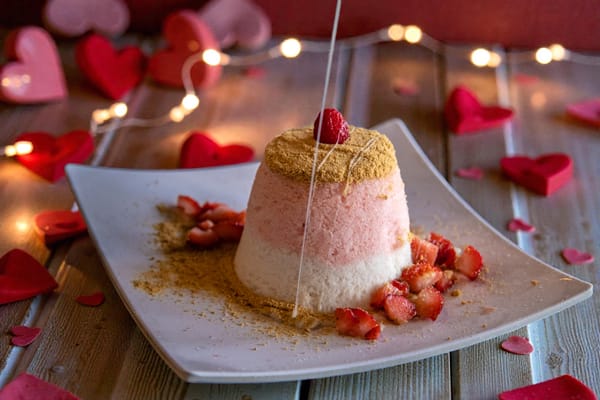
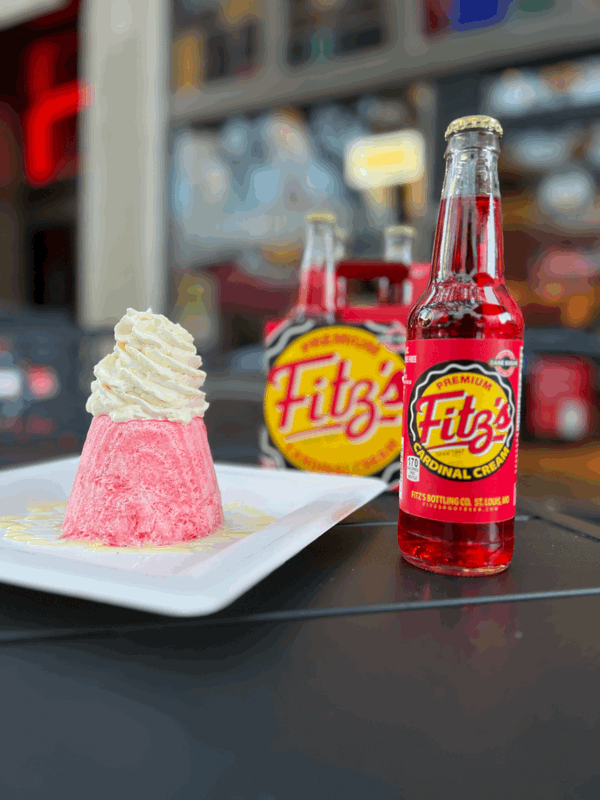
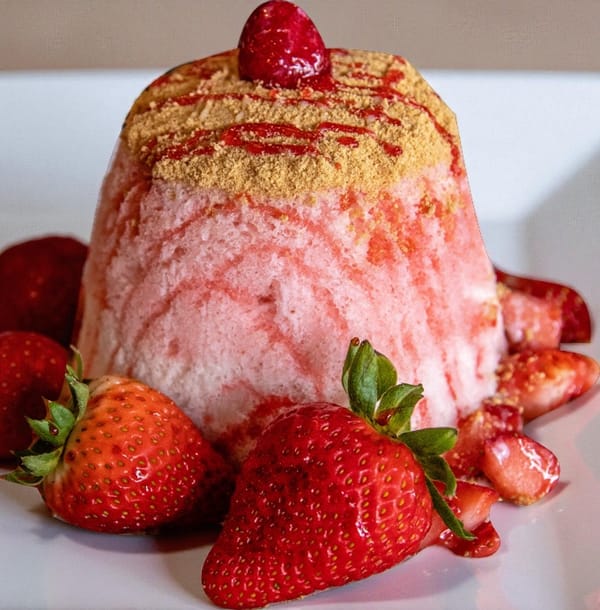
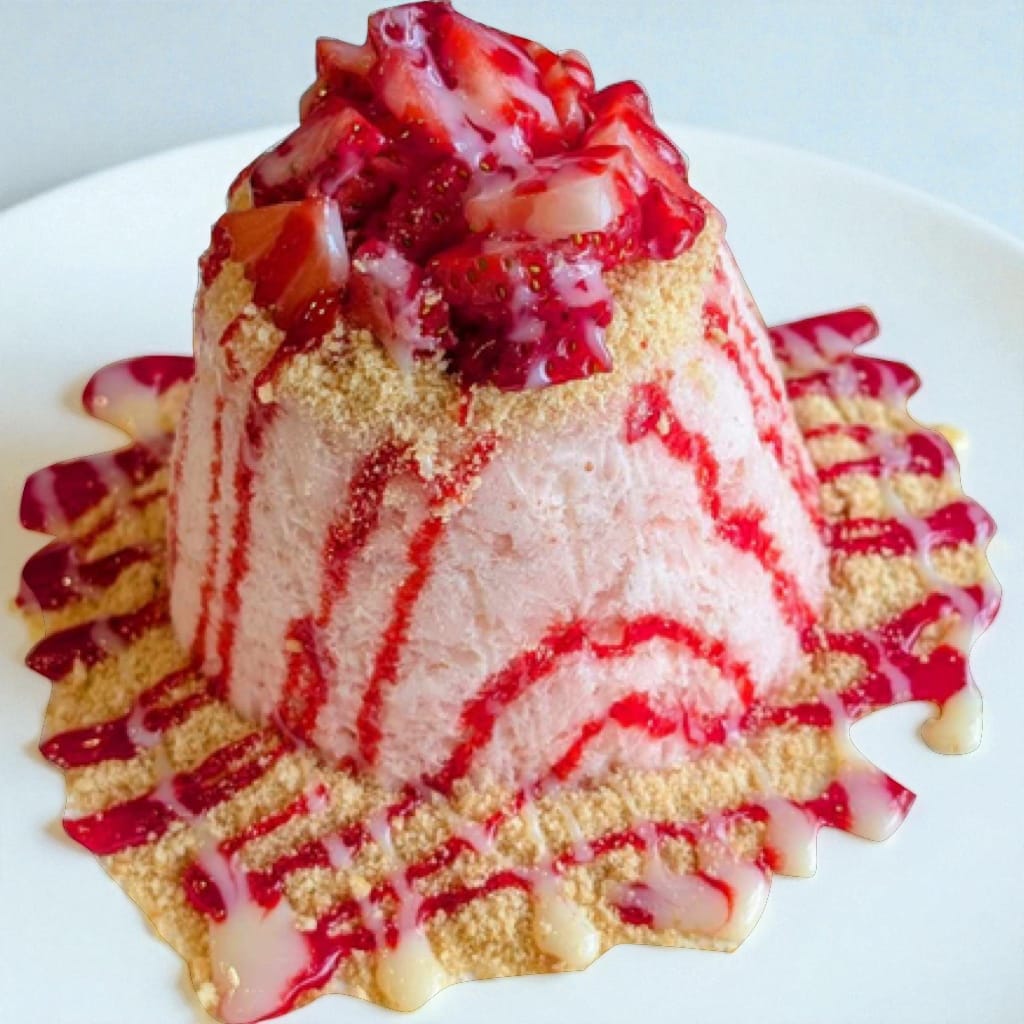
From forest clearings and royal gardens to scientific breakthroughs and global farms, the strawberry’s long journey is a testament to its enduring appeal. At Vampire Penguin, that history continues in a modern form. By incorporating strawberries into creations like Strawberry Cheesecake Snow and Strawberry Shortcake, the fruit’s legacy of perfection, sweetness, and symbolism is reimagined in every light, fluffy bite. It’s a reminder that even after thousands of years, the strawberry still finds new ways to surprise—proving that some flavors are timeless, no matter how they’re transformed.
Did you know we also deliver? Checkout our website for additional information on how to order takeout or delivery! Order Now